September 24, 2026 · By Chris Floersch
Two Race Cars, Two Different Stories
Walk through the pits at a historic car race, and you'll find cars that were built two completely different ways. Here are two of the coolest ones we found — parked just a few steps apart, and about as different as race cars get.
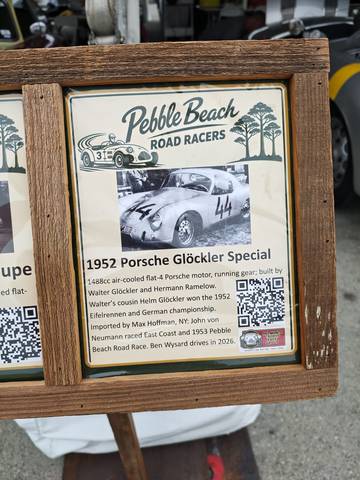
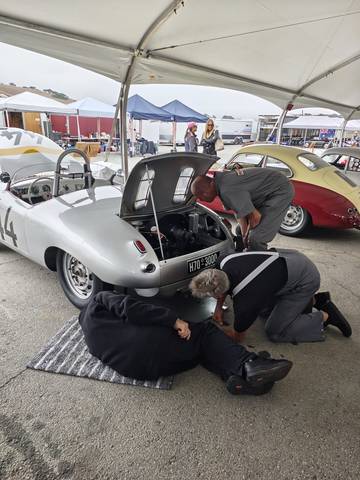
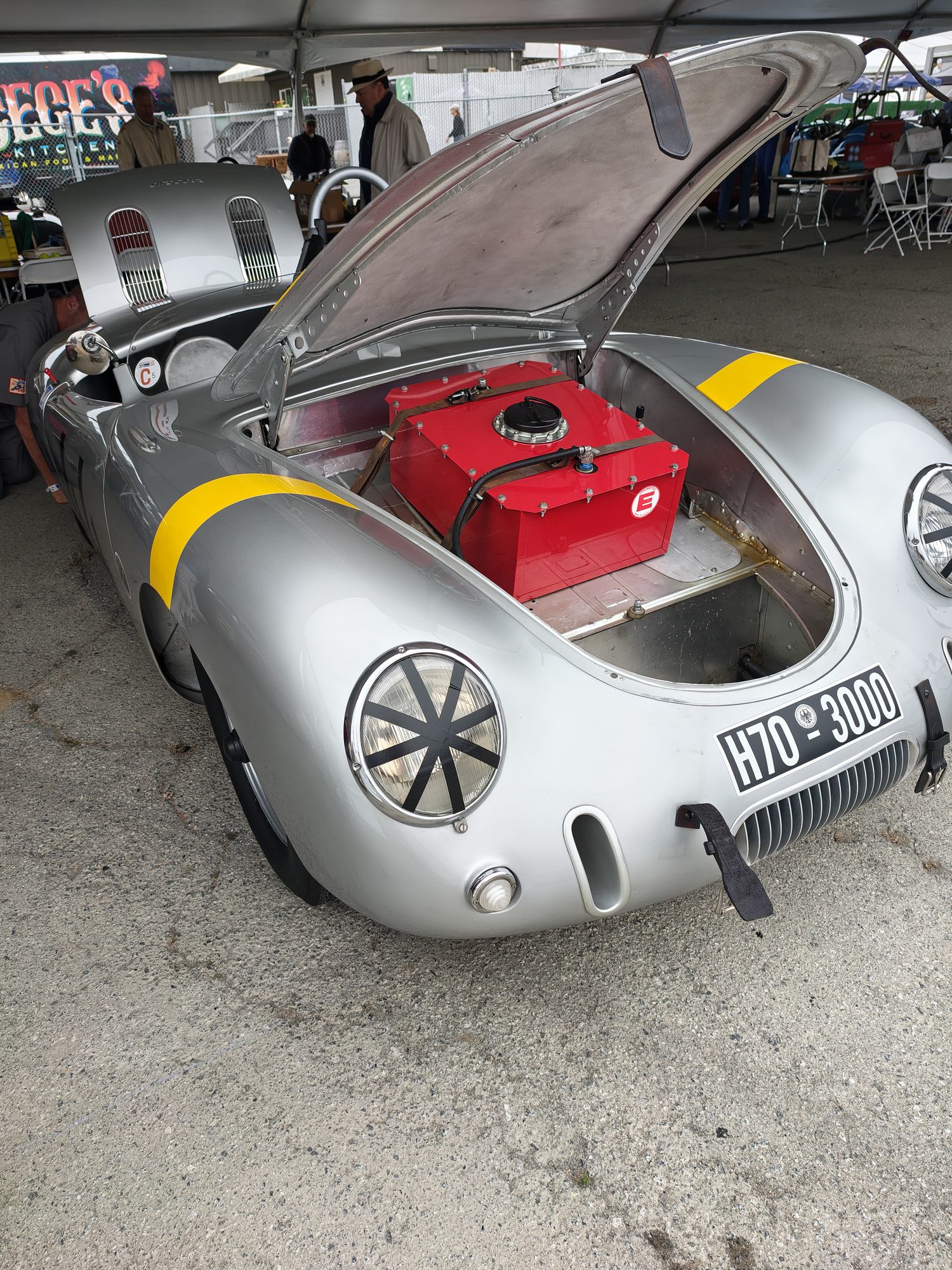
First up: a silver German rocket. This is a 1952 Porsche Glöckler Special, and here's a fun secret about it — the engine isn't up front where you'd expect. It's in the back! That means the front of the car, where a normal trunk would be, is actually where the fuel tank lives. Take a look at that bright red box under the hood — that's it.
This car has a real history. It was built by a man named Walter Glöckler and his mechanic, using Porsche parts, way back when Porsche itself was still a very young company. Walter's cousin Helm drove a car just like this one to a championship in Germany. This particular car crossed the ocean to America and raced at the very first Pebble Beach Road Race, back in 1953 — that's over 70 years ago!
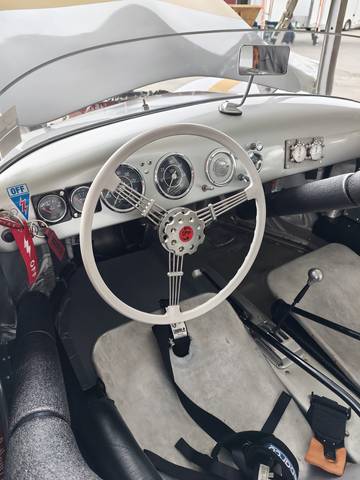
Look closely at the headlights and you'll notice black tape in an X shape across the glass. Racers still do this today. If a rock kicks up on the track and cracks the headlight, the tape holds the glass together instead of letting it scatter across the road. And check out the two little clocks mounted on the dashboard — long before computers could time a race, drivers and their crews used stopwatches just like these to know exactly how fast they were going around the track.
For the gearheads: This car runs a 1488cc air-cooled flat-four — Porsche's own engine architecture, evolved from the flat-four Ferdinand Porsche designed for the Volkswagen, but built out as genuine racing hardware. Mounting it behind the driver (rather than up front) shifts weight toward the rear wheels, which is exactly where you want it for traction under acceleration — the same basic layout philosophy Porsche would carry all the way to the 911. Take a look at the tachometer in the cockpit shot: it's marked "UPM," short for Umdrehungen pro Minute — German for RPM. Even the gauges came straight from Stuttgart.
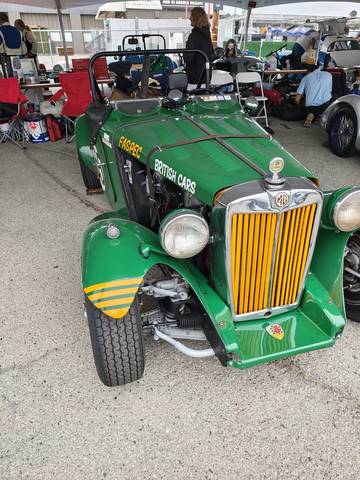
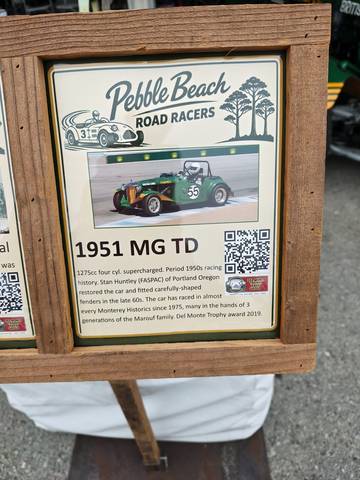
Now for something completely different: a green British special, and this one's got a trick up its sleeve too — a supercharger. Think of a supercharger like a leaf blower for an engine: it forces extra air in, so the engine can burn more fuel and make more power. This is a 1951 MG TD, but somebody wasn't satisfied with how it came from the factory, so they built their own bodywork and added forced induction. Racers have been doing exactly this — building their own "specials" in home garages — since racing began.
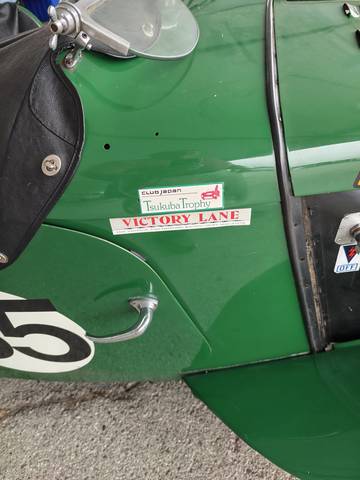
This particular MG has one of the best stories in the whole paddock. A restorer named Stan Huntley rebuilt it back in the late 1960s, and it has raced at this very event almost every single year since 1975 — that's 50 years of racing history in one car! It's been driven by three generations of the same family, and if you look closely at the side of the car, you'll spot a sticker from a race in Japan. This little green car has traveled the world.
For the gearheads: The plaque lists this engine at 1275cc, supercharged — a step up from the MG TD's stock XPAG engine, which shipped from the factory at 1250cc and naturally aspirated. Huntley's late-'60s rebuild also reshaped the fenders, smoothing out the factory's separate "cycle" fenders into the more streamlined bodywork you see here — a classic vintage-racing move, since less wind resistance matters just as much as extra horsepower. Superchargers of this era on small British fours were typically Roots-type units — the same basic supercharger design still used on modern muscle cars today, just scaled down to fit a four-cylinder from 1951.
Same era, same kind of racing, but built two totally different ways — one from a car company's own racing program, one from a garage and a lot of determination. That's the kind of thing that makes walking through the pits so much fun: every single car has its own story, if you know where to look.
Photos